Eye Clinics in Ajman, UAE
Eye Clinics in Ajman lose bookings in the same quiet way every week, and the pattern is easy to miss because no single loss looks dramatic. Most lost bookings never look like a problem. A patient calls once, nobody answers, and they book somewhere else. A buyer messages about a viewing at nine in the evening and never hears back. Nobody complains, nobody leaves a bad review, the diary just stays quieter than it should be, and the business never learns what it lost.
The front desk is the hardest seat in a small business to keep filled. Someone is always on leave, at lunch, or busy with the patient in front of them, and that is exactly when the next caller rings. An AI assistant does not replace the team, it covers the gaps the team cannot cover, at every hour of the day.
Ajman's business life is smaller and more practical than Dubai's, built around trade, the free zone and local services. The Ajman Free Zone, near the port, hosts trading, warehousing and small manufacturing firms, while the Ajman Industrial Area supports workshops and suppliers. Along Sheikh Khalifa bin Zayed Street and in Al Nuaimiya, clinics, dental practices, salons, real estate offices and small retailers serve local families. Many businesses are family-run, and owners often answer the phone themselves, so a missed call can mean a lost customer.
An eye clinic diary is built around time, because some checks are short and others need a longer visit. Reception learns to place routine checks between longer consultations, so the waiting room stays calm and the day runs to plan. Patients who book by message often state the reason for the visit, which helps the clinic allow the right length of time. When the clinic explains the visit length at booking, patients arrive with realistic expectations and the clinician can work without rushing.
How Ajman neighbourhoods book eye clinics
A clinic or agency that serves several districts needs one system for all of them. The assistant keeps one calendar, one conversation history, and one follow-up routine, so a patient from any district gets the same fast, clear answer, and the team sees every booking in one place.
The districts do not all behave the same way. Al Rashidiya is a morning district, Al Nuaimiya books at lunch, and Al Jurf comes alive in the evening. Al Rawda and Al Mowaihat are steadier through the day, and Al Hamidiyah sends most of its enquiries late at night. One assistant, one calendar, covers them all.
Distance changes the booking. People in the outer districts book further ahead, because the journey takes planning, while people nearby book for today. The assistant offers the next open time either way, and sends a reminder that can be moved in one reply if plans change.
Visitors use Ajman as a calm base for the northern Emirates. Sharjah's museums and souqs are minutes away across the border, Dubai is under an hour by road, and Umm Al Quwain's beaches and mangroves lie just north. Day trips inland reach Masfout and Manama in the Hajar foothills, or the desert and wadis beyond. Many weekend visitors come simply for Ajman's beaches and the Corniche, which feel quieter and more local than Dubai's waterfront, especially on winter mornings.
A Ajman day for eye clinics with SynapFlow AI
A working day starts early. The first messages arrive before the doors open, from people who want a slot before work. By mid-morning the phone is busy, the receptionist is with a patient, and the calls start going unanswered. At lunch the messages pile up, and by the evening the enquiries are from people planning tomorrow.
Lunch hour is the quietest hour for the team and the busiest hour for missed calls. People use their break to sort out appointments, and if nobody answers they move on. The assistant takes those lunchtime enquiries, books the slot, and sends a confirmation, so the team returns to a diary that is fuller, not emptier.
The Ajman Corniche is the city's best-known landmark, a long waterfront promenade with beaches, cafes and views across the Gulf. Nearby stands Ajman Museum, housed in an eighteenth-century fort that once guarded the old town, with displays on pearl diving, fishing and local life. Al Zorah, a mangrove nature reserve at the city's northern edge, draws kayakers and birdwatchers. City Centre Ajman is the main mall, and the Ajman Free Zone anchors the emirate's business district.
Recall is important for eye clinics, because many patients return for regular checks at set intervals. A clinic may send a reminder when a patient's next review is due, offering a choice of times in the coming weeks. Families often book several members together, which makes one trip serve the whole household. If a patient misses a recall, a single polite message with a new time is usually enough. Keeping the recall list tidy means fewer gaps in the diary and steadier weeks.
Ajman has no metro, so daily movement runs on roads, buses and taxis. Sheikh Mohammed bin Zayed Road, known as E311, and Sheikh Khalifa bin Zayed Street link the city to Sharjah and Dubai, while the Ajman Public Transport Authority runs local and intercity buses. Many residents commute across the Sharjah border each morning, so the E11 and E311 corridors fill early. Taxis are plentiful and cheaper than in Dubai, and Sharjah International Airport is the closest airport for most travellers.
Without a car, Ajman is workable but slower than Dubai. Local buses connect the Corniche, Al Nuaimiya, Al Rashidiya and the intercity bus station, and taxis are easy to find at malls, hotels and the Corniche. Ride-hailing apps also operate, which helps visitors without local knowledge. Parking is generally easier than in Sharjah or Dubai, except in older parts of Al Nuaimiya and Al Rashidiya in the evening, where towers share limited bays. Newer districts such as Al Mowaihat and Emirates City offer more space.
A Saturday morning in Al Jurf
The weekend here is Saturday and Sunday, and Friday is a half day that ends around midday prayer. Enquiries do not stop on Friday, they change shape: people message in the morning, plan the week ahead, and book for Saturday or Sunday, and the assistant answers them all.
Saturday is the busiest day for many clinics and agencies, because it is the first full day of the weekend. Viewings, checkups and consultations fill the diary, and the phone never stops. The assistant takes every enquiry, books the open slots, and sends reminders, so Saturday stays organised instead of chaotic. After a longer eye visit, a short review is often booked before the patient leaves. That review gives the clinician a chance to check how things have settled and gives the patient a clear next date. A reminder the day before is especially useful for early slots, when a missed visit leaves a long gap. If the patient cannot attend, offering the next available time in the same message keeps the plan moving. Small, steady follow-up builds a habit of regular attendance over the years.
An example WhatsApp conversation in Ajman
Here is an example of the kind of conversation the assistant has every day. It is illustrative, with no real patient or client, and it shows how quickly a booking is made when nobody has to wait on hold.
Do you have any appointments this week for an eye exam?
Good morning! Yes, 9:30 am tomorrow is available. Shall I confirm it for you?
Yes, 9:30 am works for me. Please confirm the booking.
Confirmed for tomorrow at 9:30 am. You will get a reminder message before your appointment.
The whole exchange takes less than a minute, and the person never had to call, wait on hold, or visit a website. The appointment is in the calendar, the reminder is scheduled, and the team can see the full conversation in the CRM. That is the experience SynapFlow AI is built to give every eye clinic in Ajman, whether the enquiry comes from Al Rashidiya at noon or from Al Hamidiyah at midnight.
What SynapFlow AI does for eye clinics in Ajman
Four tools do the whole job. The AI receptionist answers the phone and the messages, WhatsApp automation books and confirms, GoHighLevel CRM keeps the record, and custom n8n workflows link everything together, so a booking made at midnight is in the calendar, confirmed, and reminded without anyone lifting a finger.
The first step is always a free automation audit, before anything is sold. The audit finds the missed calls, the slow replies and the bookings that never happened, and the setup is built from those findings. Most businesses are live in 14 to 21 days, with the team trained and the calendar connected.
Food in Ajman reflects its large South Asian, Arab and Filipino communities. Al Nuaimiya and Al Rashidiya are full of small restaurants serving biryani, karak chai, shawarma, mandi and Filipino dishes at everyday prices. The fish market near the port sells the morning catch, and the old souq area still trades in textiles, spices and gold. City Centre Ajman and the Corniche cafes cater to families in the evening, while Ramadan brings night markets and late gatherings after iftar.
The path from a eye visit to further care is step by step. A patient arrives for a check, the clinician explains what they found, and the next steps are discussed in plain language. Some people want to go ahead at once, while others prefer to think, check details or talk with family. The clinic records the agreed plan and books the next visit at reception, so nothing is left to memory. A written summary helps the patient follow the plan at their own pace.
Fridays and Saturdays are the busiest days for most eye clinics, because families visit together. Weekday mornings suit routine checks, while evenings suit people who work through the day. A clinic that keeps a waiting list can offer a cancelled Friday slot to the next family on the list, often within the hour. When the whole team uses one diary, the patient hears the same time from every member of staff. That single, consistent message is what patients remember and trust.
The weekend in Ajman runs Saturday and Sunday, with Friday as the prayer day and a quieter midday. Friday mornings are slow, mosques fill around noon, and families gather for lunch before the Corniche and malls fill in the afternoon. Saturdays are the busiest day for salons, clinics and shopping, as families run errands together. Sundays are calmer, with beach walks in the morning and early dinners, and many people prepare for the Monday commute to Sharjah or Dubai.
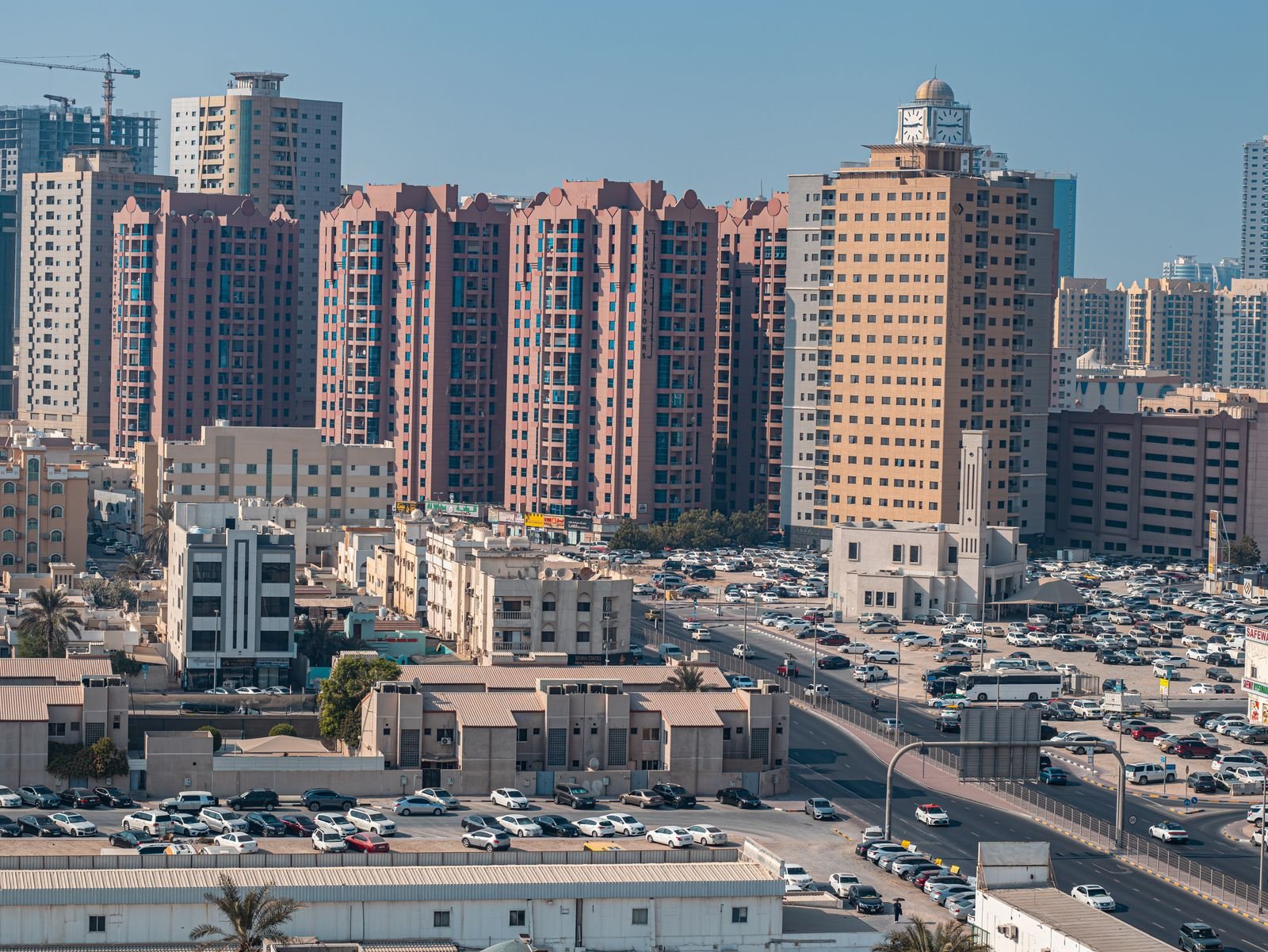
Al Rashidiya is Ajman's traditional urban heart, a dense mix of older villas and newer towers close to the Corniche and City Centre Ajman. Al Nuaimiya, just south towards Sharjah, is a busy family area of apartments and shops, popular with commuters. Al Jurf is quieter and more spacious, home to Ajman University and several international schools, with villas and student housing. Al Rawda, Al Mowaihat and Al Hamidiyah are newer residential districts further inland, with wider streets and family villas.
Pricing for eye clinics in Ajman
Pricing is simple and in US dollars, with the local equivalent shown alongside. The Starter plan is $197 per month (about AED 723), the Growth plan is $397 per month (about AED 1,458), and Custom plans start from $697 per month. Every plan starts with a free automation audit, and setup takes 14 to 21 days.
Ajman services
- Medical Clinics in Ajman
- Dental Clinics in Ajman
- Aesthetic Clinics in Ajman
- Eye Clinics in Ajman
- Real Estate Agencies in Ajman
- Law Firms in Ajman
Frequently asked questions
How quickly can eye clinics in Ajman start taking bookings with SynapFlow AI?
Most businesses start taking bookings within 14 to 21 days. The free automation audit comes first, then the assistant is set up around the real calendar, the real services and the real team, so the first booking can arrive on the first day the system goes live.
Does SynapFlow AI work with our existing calendar and GoHighLevel CRM?
It does. The calendar and GoHighLevel CRM are connected during setup, so the assistant books the real slots, the team sees the real diary, and every message is saved against the right contact.
Do patients in Ajman talk to a real person or to the AI assistant?
Patients talk to the AI assistant first, and the assistant is clear that it is an assistant, not a person. When a question needs a human, the assistant passes the conversation to the team, with the full history attached, so the person never has to start again.
What does SynapFlow AI cost for eye clinics in Ajman?
Starter costs $197 per month, Growth costs $397 per month, and Custom starts from $697 per month. Prices are in US dollars, the audit is free, and setup takes 14 to 21 days.
Other Live Cities
- Dubai, UAE
- Riyadh, Saudi Arabia
- Jeddah, Saudi Arabia
- Doha, Qatar
- Kuwait City, Kuwait
- Abu Dhabi, UAE
- Sharjah, UAE
- Dammam, Saudi Arabia
- Khobar, Saudi Arabia
- Madina, Saudi Arabia
- Makkah, Saudi Arabia
- Muscat, Oman
- Manama, Bahrain
- Toronto, Canada
- Vancouver, Canada
- Calgary, Canada
- Ottawa, Canada
- Edmonton, Canada
- Brampton, Canada
- Surrey, Canada
Get a Free Automation Audit | WhatsApp +923401461680
Reviewed by Asif Raza, Founder of SynapFlow AI. Last Updated: 9 November 2026.